
12 minutes | Wednesday, 4 November 2026
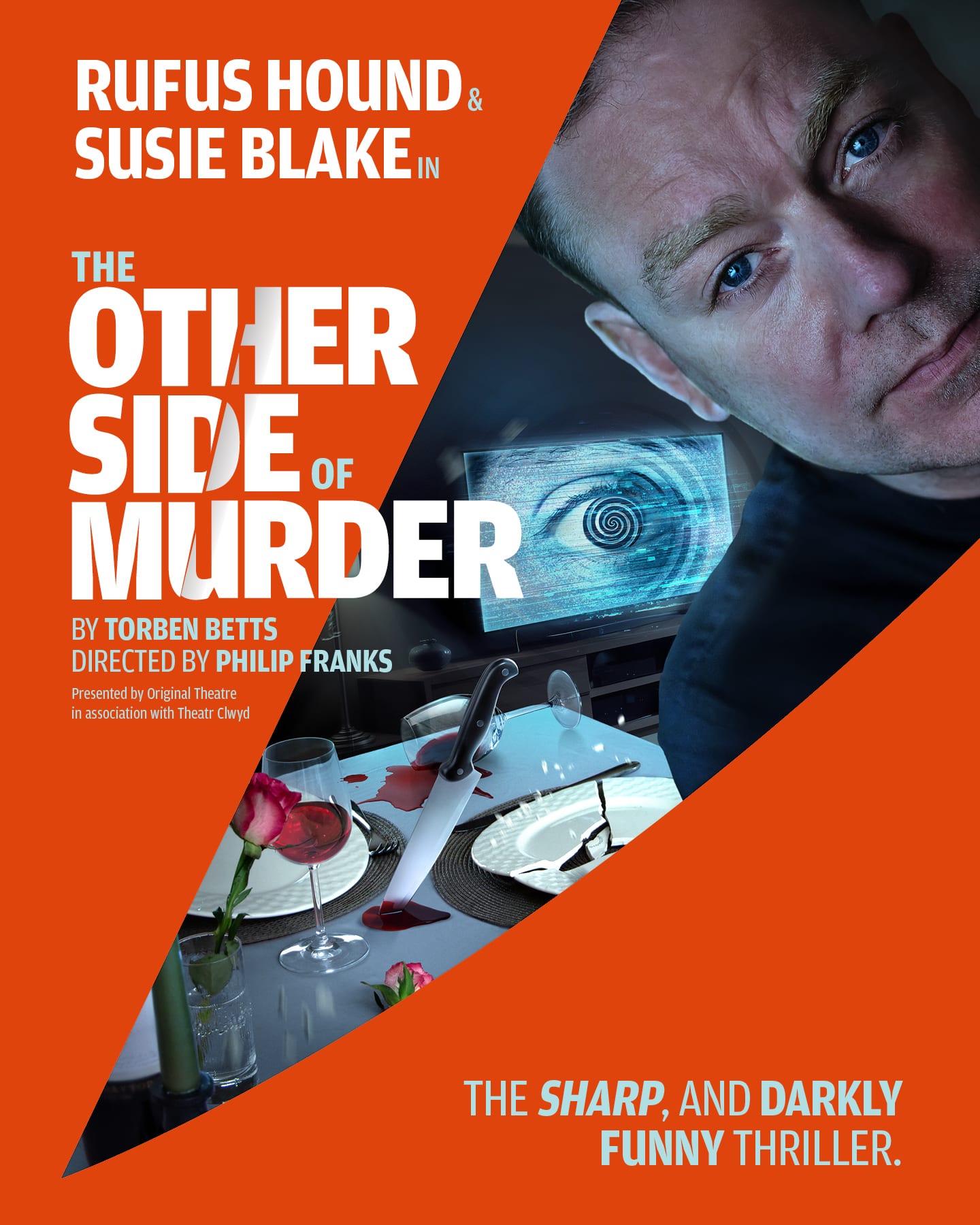
Welcome to Voice FM. Secret suspense and dark comedy take center stage in The Other Side of Murder, coming to Southampton's Mayflower Studios in November, as a celebrity medium's family gathering descends into chaos, with unexpected visitors, ghostly goings on, and revelations that nobody sees coming.
I'm catching up with Andy MacLeod, who plays Jason in the new touring production, here to talk about his role, his career across stage and screen, and bringing this twist-filled role to stories and audiences across the country. Andy, how are you? Yeah, I'm good, thank you. It's nice to be here. Great. So for anyone coming to The Other Side of Murder without knowing anything about it, how would you describe the world of the play, and what makes it such a compelling story to tell?
Well, the, the world of the pl- I think it, what makes it the most compelling is that there are about four different worlds that the play inhabits. Um, it's, it's murder mystery, it's farce, it's fast-paced, it's... There are, there is a supernatural element, um, that is really exciting, and there are some, there are some big reveals kind of along the way, um, that I think will shock and surprise in all of the good ways, hopefully.
Great. And you play Jason in the show. Who is Jason when we first meet him, and what should the audience be looking out for as the story unfolds? So Jason is a wronged, uh, sort of jilted partner of Laura, one of the central characters, um, who is involved with, with Peter, who's our psychic medium, who's the lead character played by Rufus Hound.
Um, and, uh, the, the sort of... My character represents a fair amount of spoilers, so I won't go into too much detail, but suffice to say, when you meet him, he is slightly irked by his partner's involvement with said psychic medium Uh, interesting. And you also did recently understudy for Peter in Guildford, if I've gotten that right.
Does it feel strange performing in a different role during a show that you're already familiar with? Yeah, it can do. I, I think it was a, it was, it was a real blessing having that in Guildford because, uh, first of all, we knew about it going in. It was a contractual thing, so it wasn't sort of sprung upon us.
We, uh, we, we, we were able to kind of prep and plan for it, which was, which was obviously nice. Um, and, uh, and, and it was... But the, the sort of challenge was it was quite early on in the tour, so the, the, the show was still sort of bedding in and kind of finding its feet. Um, so to have such a sudden kind of gear shift for everybody was a challenge.
But, uh, it's a really, it's a really great company and a really supportive company, and it's always nice when kind of covers step up. I think it's, uh... It, it kind of gives a, adds a bit of spice and a bit of variety for everybody, so it was, uh... it ended up being a lot of fun. And having three goes at it was really nice 'cause you can sort of feel like you can get into a bit of a rhythm with it.
Um, 'cause the first one is naturally quite adrenaline fueled and then you're like, "Oh, we get to come back tomorrow and do it twice." So it was, uh... You're, you're allowed to kind of let it bed in a little bit. Moving back to the character of Jason, what was it that initially drew you to the role? Was it the character himself, the writing, or the opportunity to be part of a murder mystery on stage?
Sort of all of the above. Um, the character, the character's written as ki- he's a real impact character, which is really nice for me. Like, I like he, he comes in, we meet him quite late in the piece, and he represents quite a massive sort of gear shift for the audience, and that kind of stuff to play is always, like, a r- is always a, always a real joy.
It, it re- it, it, like, sort of yanks the play into a completely different- Realm. Also, he's, he's largely in kind of complete ... 'Cause he's a big, he's an antagonist, so he's largely in c- quite a lot of control, um, for the, the, the sort of section that he's in in terms of the narrative. So that you can't, you can't not enjoy playing that really.
It's, you, you get that natural kind of audience feedback. I appreciate that you probably can't say very much about his role narratively- Mm ... but as an antagonistic figure, is there moments where you think the audience will see him in a very different way to how he sees himself and how he's being portrayed?
Yeah, 100%. Also, he's got a s- you know, he's got a softer side which kinda comes out. There's a so- there's a, there's a sentimentality to him. I think he's, he's quite a, um, I, I, I totally empathize with his emotions given the situation that he's in. I don't, I don't quite agree with his tactics. Um, he really does sort of go to the extremes, like, really, really quickly.
But I think, I think there's a lot of rela- there's a lot of reliability there. He's not, he's not, he's not entirely, uh, he's not an entirely negative person in that regard. Whodunit mysteries often depend on what characters choose not to say, and audiences- Mm ... hyper-focusing on all of the individual characters and their motivations.
Does that change how you portray a character when in a, in a genre like this? Yeah, a little bit because one of the great things is there's, there's, there's always like a knowledge scale in terms of the characters, like, who knows what and, and, and, and who knows the most and who knows the least, and everything else in between.
And you're playing both subterfuge with the other characters on stage, and subterfuge almost with the audience as well, so it's got that lovely, like, uh, almost sort of meta element that, that, that there are just, like, three ... There's almost, like, three different kinda levels to it. Um, 'cause you wanna know, you know, your character doesn't wanna reveal that they know a certain thing to the other characters, but also you as an actor wanna keep a little bit of cards close to your chest in terms of what the, what the audience know.
So it's, it's a really nice kind of added detail. You've also appeared a- as well as in The Other Side of Murder, in the television series A Good Girl's Guide to Murder. Mm-hmm. What is it about crime stories and mysteries that make them so appealing to audiences and to actors? I, I, it's gotta be the reveals, hasn't it?
It's gotta be the, like, we know that something's gonna happen, but you don't know, and, and having that, having that knowledge and, and, and I think as a viewer, like I love watching, like, you know, there's so many kinda crime dramas around and I, I, I, uh, I really, really enjoy watching them for that very reason.
I like being surprised, and I like the suspense of them, and I like the ... Uh, and also there's a psycho- there's like a human psychology element to it, isn't it? Like, it's seeing people behave in a certain way and trying to get us to expl- you know, trying to explain why people are who they are. Like, you know, so many people have a kind of morbid fascination with, with people that do really, really horrible things, and the psychology of why they do those horrible things.
Um, and my career, like, uh, like, I, I, obviously I'm not playing a police officer in this, I'm on the other side of it, but I, I play a lot of coppers. So I'm usually on the side of like, uh, on the kinda good side and the kinda moralistic side and trying to like, trying to solve the mystery, but it's nice to be a part of a mystery for a change.
Do you feel that like, um, the, the kind of, uh, dichotomy of like p- playing a cop normally and then playing an antagonistic figure, does that, uh, kind of impact your, not enjoyment necessarily, but your engagement in the mystery element of it? Um, I don't know really. I think it's, you, you just do the, it's that's your, that's your kind of bit.
Um, like I like playing police officers. I think they're interesting, they're interesting people and the- the- there's a, often with, often with kind of sto- you know, the some of those stories and some of those characters, they're, they're, they're, they're obsessed with the truth and kind of finding the truth, and that stuff's kind of really interesting to, to mine.
Do you feel that, for me personally, I, I like the, uh, murder mystery genre, uh, and like playing along with detectives and trying to solve it before they do, do you think this is a show that will appeal to those kind of audience members? Oh, yeah, 100%. I think the pacing of it's really good, um, in terms of like the what's revealed and when, and how you kind of find bits out, and taking you down all the little avenues and kind of tributaries and stuff.
Um, and also it's, also it's, it's really funny as well . Like you, like you are, you are also supposed to kind of laugh at it and, and, and, and I think that, that always adds a really cool element to it as well. And your career has taken you between television and theater. Mm. What differences in the medium do you appreciate about each one?
Um, big one with theater is rehearsal time, um, and time, time you get to kind of really develop a, a company kind of spirit and mentality, particularly when you're touring, you're traveling the country and no one's going, you know, no one's going home at the end of the day. Like we're all in digs and staying in very diff- different various places.
Um, but you sort of can't help but find that kind of company spirit. And just doing it multiple times and kind of really honing it. Like, and I'm not saying that, I'm not saying that TV and film sets aren't company-minded and company-spirited. At their best, they're, they're, they're very warm places to be and very supportive places to be.
Um, but you, you l- you learn your, you learn your stuff sort of largely individually- You get, you get told when a car is gonna pick you up, you get driven to set, you do your thing, and you go. And with, with a, with theater, it's that, it's that rep- it's that repetition and that continuing to kind of find and hone and improve and, and, and, and that's the, that's the kind of key, the key difference.
And obviously the liveness of it, like that's obviously a clear one. It's kind of, you know, there's a, there's a, there's a different audience experi- experience in this show every night and, and that's, that's really cool. Well, I'm thinking that you were also in one of the previous productions, uh, 'cause this is the last in a trilogy of, um, The Murder- It is
Mystery starring Rufus Hounds. What has it been like to kind of... I, I assume you were a different role in each, uh, production. How does it feel kind of transferring between the two? Yeah. So I played a police officer in the last one. Uh, yeah, so I was in, I was in Murder at Midnight, which was the second installment of the trilogy.
Uh, Susie Blake is in, is, is in all three, so she, she did Murder in the Dark, Murder at Midnight, and The Other Side of Murder. Uh, and I've done, I've done these, these two, and they, they all have, uh, they all have a farce element, they all have a supernatural element, they all have a similar sort of, similar sort of sense of humor and a similar, um, a, a similar kind of central protagonist, uh, kind of troubled central protagonist or problematic central protagonist that, um, sort of either sees the error of their ways or, or is, is confronted with their, with having to, uh, answer for s- their behavior, basically.
Uh, they, they're the kind of thematic things. Um, but obviously moving from the last one to this one, the last one was much more domestic. This one goes in, in much more sort of different directions. They're both, they both happen real time, which re- which is, is, is a, a, a theme in farce and, and really helps the kind of comedic element is that, you know, the everything isim- everything is immediate.
There's no time to breathe. There's no time for a character to kind of run off and consider their actions. Everyone's kind of living on instinct. Um, yeah, so th- th- they're the sort of, they're the sort of key correlations. Really interesting. Well, thank you very much for your time today. The Other Side of Murder plays Mayflower Studios from the 16th to the 21st of November this year, with tickets available now on the Mayflower website, a perfect show for murder mystery fans all across Southampton.
Thank you very much for joining me today, Andy. Oh, it's a pleasure, Alex. Thanks for having me. Thanks very much.