
17 minutes | Wednesday, 4 November 2026
Hi, I'm Alex Mitchell with Voice FM, and joining me today is Pradeepa, a watercolor artist based in, uh, Chandler's Ford. Pradeepa, how are you doing? Yeah, I'm good, thank you. Really good. Well, thank you very much for joining me today. Um, so can I ask for y- uh, listeners hearing your name for the first time, how would you describe Pradeepa the artist?
Oh, um, yeah. Th- thank you. Well, first of all, thank you for having me on today. Um, as an artist, I w- I think two words would... I would use two words to describe, um, me as an artist. So, uh, the first word being optimism. Uh, I l- I'm, I'm quite an optimistic person, and that then, um, is seen in my art. So I try to pick the best of everything that I see.
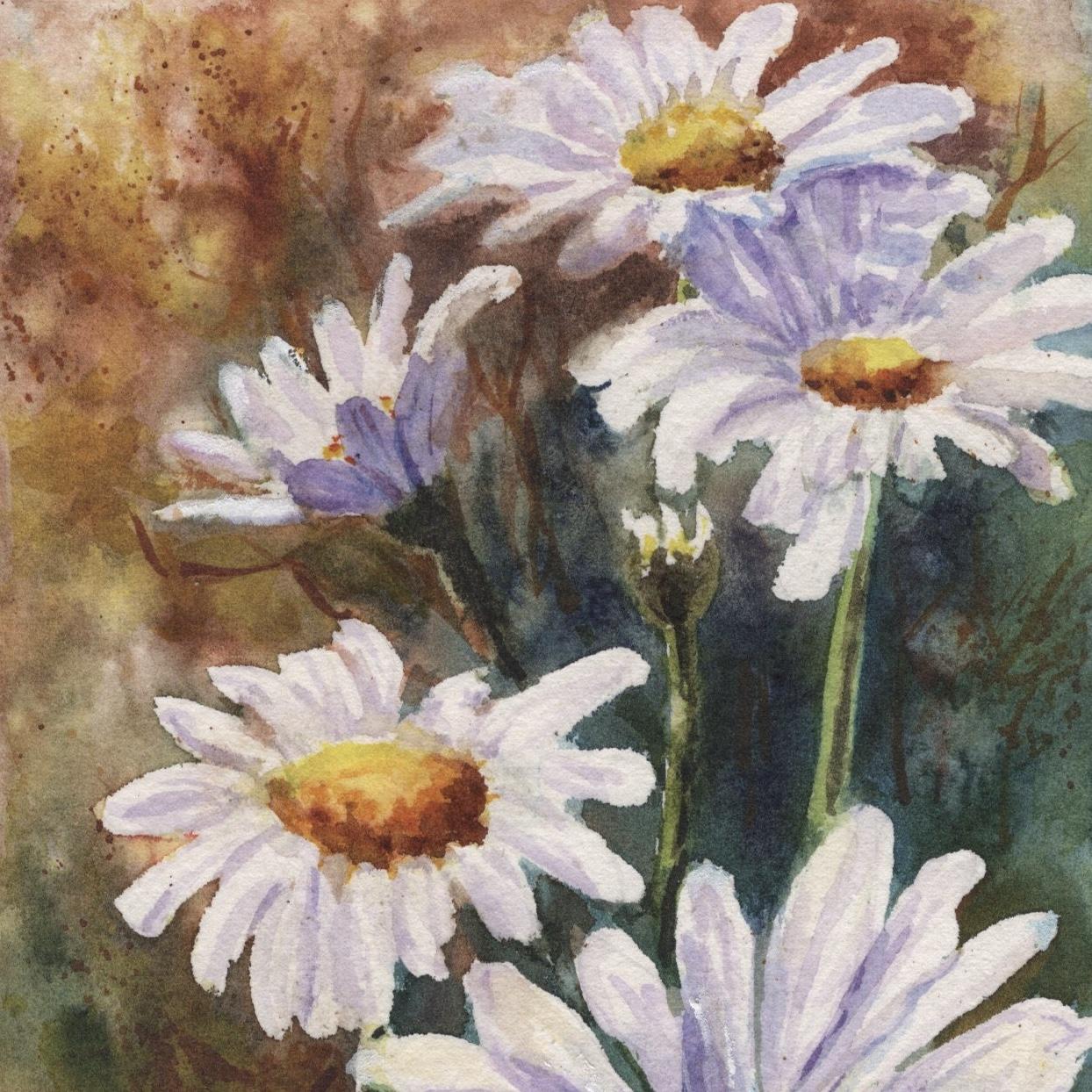
And, um, and so and then that then quite nicely leads on to the fact that I use quite vibrant colors, which is not very common for watercolors. It, it tends... Everybody... When I say watercolors, people think it's all pale and wishy-washy, whereas my watercolors tend to be quite vibrant, um, and people mistake them for acrylic.
So I think that those are the two things, you know, um, just the, the... I'm a very optimistic person for being an artist and, uh, and also I like to bring out the vi- you know, the vibrancy in everything that I see. Yeah. Lovely answer. Yeah. What was it about watercolor specifically that kind of drew you into that as a medium, and opposed to other art forms?
Um, that's a good question. Uh, I have thought about this a lot actually, and I think it goes down back to my childhood. Uh, so when I was a child, I painted a lot in watercolor, uh, and we'll probably talk about that later. And so for me, it's a ... And I think being a first child growing up in India, there was a lot of responsibility, and I feel in a way I lost a bit of my childhood.
And so watercolor for me is getting back, uh, reclaiming a part of my childhood. And also the way that watercolor works, it's a very flowy medium. Um, you can't control it very much. You just have to almost be like a child to, um, enjoy painting with watercolor. Sometimes it'll just do things that you don't expect.
So it's being able to work with watercolor rather than being super controlled. I mean, there are artists who have very, you know, s- precise controlled watercolors. But I just love the loose, flowy, unpredictable aspect of it a lot. Interesting. Yeah. Okay. Yeah. So, um, you were born and raised in India before moving to the UK in 2003.
How does your Indian heritage find its way into your artwork? Uh, I think, uh, first of all, I would say in the fact that I love everything to be so colorful. Um, I try and put as much color as I can without it being too garish or too childish. Uh, so that would be the first way. And, and as you know, I think the more hotter the country gets, which is the part of India that I am from, where it's really hot, everything is, um, you know, uh, uh, whether it be what you see, what you f- feel.
Um, you know, the heat is intense. The, the tastes are intense, and so much more. So everything is about that, the vibrant aspect of everything. So, uh, and I like to bring that out in my watercolors. And of course, the other thing I think, which I've started to do more recently, is starting to introduce, like, Indian designs in the backgrounds of even my florals.
So I'll, you know, I'll use stencils that I got from India to, uh ... So there's a, there's um, a art form called kolam. So where, where you, especially during religious festivals, uh, Hindu religious festivals, they would use, um ... It used to be rice powder that they would, uh, with their hands, they would just draw on the floor just outside their house and make all those intricate patterns.
And so there's, I've got some of those, um, stencils with me, which, you know, when I feel like this, this is getting too boring and too monotonous, I'll just put that into, um, put that into the background especially. And, um, yeah. So there's just a few ways that I incorporate, I think, my, my heritage. And I, on the other flip side of that, Britain has very different colors and landscapes.
Yeah. Was there something about the areas around Southampton, like the New Forest and other natural spaces like that, that particularly inspired you? Um, yes, it is true that Britain is not as vibrant. However, you cannot beat Britain on a warm summer's day. Uh, that's my absolute favorite day. Um, and also, um, after the rain, when ev- everything just seems so much fresher because ob- obviously the, the dust in the air is gone, so you can see everything so much more clearer, and the green is, like, so green, if that's a word, you know?
The yellow is really yellow. Um, and so th- like, those aspects I really love. Um, and also I think I've found, like, the evening times, the morning times, Britain is just absolutely beautiful, especially places like the New Forest. I mean, even when I go for a walk around here, I find something that... You know, the sunsets and the sunrises, there's, there's just something really beautiful about each, each of those things.
So yeah, so when I find those things, I quickly snap them up with my phone because, you know, I never know when I'm going to see something else like that. So, and, and a lot of my art then comes like that because I have, I've got all these images on my phone as references for the, you know, for the future.
And so when I'm, when I'm lacking inspiration, I can always go back and flip through the images. Although nowadays I'm trying to do that more outside, so I have been to Hillier Gardens in Romsey a few times to, to capture things as they are in real life. So yeah, so I just love that about everywhere where I live.
And, and when we go on holiday to the Lake District or to the Isle of Wight, you know, the, there's just so much. Ev- there's no lack of inspiration in the UK. Absolutely, yeah. And especially where we live. Yeah. Yeah, we're definitely very privileged to live in the kind of part of the UK that we do as well.
Yes. So when you first moved here, you originally trained to work as a doctor. Yeah. Did you ever imagine that one day you'd be making a living as a watercolor artist? Oh, absolutely not. Absolutely not. I think if you had told me in, um, about 2010 that I would be, in 2026 I'd be living and, you know, working as an artist, making a living as an artist, I would have, I would have said you were absolutely crazy.
So, so yes, did not see that coming at all. So it's a complete... Yeah. Uh, you describe the moment that you, uh, first picked up an ordinary paintbrush and you felt something come alive inside you. What was it that happened that afternoon? Um, so yeah, so that was a really funny afternoon in the sense that when...
So when I was, um... So to for- to, to give a bit of, you know, background to this, but my children are very arty. Where growing up, uh, my daughter did art as a GCSE, my second one did art as a, you know, in her GCSE, A levels. Uh, that's of course more recent. But even growing up, they were very arty, very creative, very good at what they did.
And I always used to think, "My goodness, look at them, they're so good." Um, because in my mind I was, at that point, this was, you know, in the between 2010 and sort of 2018. I just used to think, "Oh, they're so talented. I wonder where they got that from." And and never, never quite, um, never quite thought that maybe it did come from me.
And, uh, so whenever there was an art co- anything to do with art, I'd say, "Well, you should go and do it. You should put your art out, and you should maybe start a Facebook page or an In- you know, or an Instagram page maybe." And they, they were like, "No, can't be bothered. No." So one, one day in 2018, I think this was, when I, um, started to, uh...
A- actually it was a bit of a rainy summer's after- you know, afternoon. Uh, and, uh, we had nothing else to do, so my children took out their pan set of watercolors. And, um, I remember it was my second daughter and my son who were sitting. My son was really little at the time. So I said, "Well, why don't you just, you know, paint something?
We'll, we'll watch a YouTube video or something, and then you can see if you can paint that." And while they were doing that, I thought, "Well, let me get a, um, a set of, uh... You know, let me get a paper and a, a brush and just see what, what comes out." And so I just thought, "Okay, let me paint some tulips," 'cause, you know, tulips are easy to paint.
Their shapes are fairly, you know, predictable. And as I was painting that, I, uh... It was, it was just re- It's hard to describe, but it was almost as if, as I painted that, um, it was as if somebody unlocked the, um, you know, file drawers in my brain and pulled out those old files, um, that had been... Those memories that had been buried for decades even.
So, and then I started remembering how, um, when I was a child, I used to paint a lot with watercolors. I won competitions, um, in school. I got sent to represent the school at an art competition, which I never went because, um, I think I, I f- I fell ill on the day. And all of these memories started to come back, and I realized that actually, um, this was something that was already within me.
This was part of who I was, and, um, and I shouldn't ignore it. Because at that point, I was sort of debating whether I should go back to medicine or should I do something else, and that's when this something else cropped up. And I thought, "No, I should give this a go." I, I had no idea where it would take me, but I thought, "I need to do more of this.
I need to see how to play with color." So that- That was kind of, yeah, how it started, I think. But I don't know if I've answered your question. I think, yeah, absolutely. That's a really, like, kind of beautiful story there. Mm-hmm. You were self-taught for much of your journey with the painting. How did you learn to paint, and what did those kind of early experiments look like?
Oh, they were terrible disasters. I think, um, that's the best way to put them. But, but I did end up with some... You know, sometimes it would turn out really well. Sometimes, you know, it would be an absolute mess. I have so many paintings to show for that. And, um, uh, there was a... You know, I started to watch YouTube tutorials, but then a lot of them don't actually...
You know, they're like quick, quick demos. They don't... Whereas if you're trying to see, oh, well, how did they actually do that particular thing, or what would I need to know to be able to paint this? And i- i- it was not enough information all the time. So it was a lot of trial and error and learning, trying new paints.
Um, you know, I learnt about, uh, granulating paints or mineral-based paints. So I just bought some more and tried different things. Um, it was also then I, I started admiring certain artists in the current, you know, space, artistic space, watercolor artists. So I thought, "Well, I really like these artists, so why don't I do a course by, by them?"
So I have done a few c- courses from... And I think that's something I've, I've still really am keen and enjoy doing. You know, if I really admired a, an artist, I'll go and do a workshop with them to see actually how do they achieve that. It m- You know, all of that might not translate into my painting practice, but, uh, I will go and, and I'll...
And in a sense, it's almost become like a self-made art, art learning process, you know? I wouldn't call it an art degree, but, you know, in a... That's kind of what it's... I've, I've put together my own way of learning. I think having spent six years in medicine in the u- at uni, I didn't want to do that all over again with art.
So that's how I've kind of slow and, slowly... And you know, th- there was once I wanted to learn how granulating co- how to work well with granulating colors, and so I went and did a, a workshop on that. I, I looked up some YouTube tutorials. And I think the more I've painted, now I know I don't need much information, uh, from an artist.
I think if they... There's just a few pointers that I need, and then I can go off and do my own experiments. So that's, um ... And, and also committing to a painting practice of painting pretty much every time there was time. You know, when I started painting, my children were still little, so I painted when they were at school or even when I had a couple of hours in between, uh, them going to nursery and back.
And, um, so, and, and last year actually I did something called, um, 100 Day Project, which is the goal is to paint one painting a day every day, or painting for 100 days continuously as best as you can. So I, I had, you know, I did a lot of paintings then, and I saw my, my art really grow, my confidence really grow even, even through things like that.
Yeah. So yeah, definitely consistency and keep learning is how I've grown. Absolutely, yeah. What would you say to people who are maybe feeling unsatisfied in their current careers and questioning whether or not they want to make a jump to pursuing a career in kind of their passions like art? Um, do you know, I've met many such people in real life too, so I've met other medics as well who, um, either have made the change into something else, um, or, uh, are really, you know, uh, find that they- they're a bit of a, is that a square peg in a round hole?
Bit like that. So I would say, um, the best thing to do is to... You know, it depends on your risk-taking level. I mean, I had a husband to support me financially through the time that I built my, my art, um, c- career and my painting practice. But people are at different, um, situations. But I would always say, you know, if you feel drawn in a particular direction, and you definitely have to give that a go.
Um, somebody I know said, you know, "If you see an opportunity," or if, like if you think of an opportunity as a, as a rock or a stone that you see, always kick it over, have a good look. And that's what I would say. You know, um, if you feel that you need to do something else, well, try it in a small way in which does not involve a lot of risk.
You know, like dip your toes in it. And then if things open up, doors open up, things get better, then take a bigger risk and keep going. But you'll never know unless you make... Too many people live in the area of, "Well, I really want to but I'm not sure." But you've got to take action in that direction and see where, what...
And, and it might confirm to you one way or the other. You know, that either that was for you or that it definitely wasn't for you, so you don't have to live in that area of, "Oh, I wish... Oh, I wish I could." Um, and then you can give yourself 100% to wherever you are at at this point in life. I don't know if that, that would help somebody, but that's what- Brilliant answer.
Yeah. Thank you very much, Pradeepa. So, uh, I believe that you're, uh, you're currently open for commissions. I had a look at your website earlier and there's some absolutely gorgeous- Yes ... pieces of art there. How can our listeners contact you about, uh, getting you to commission for them? Um, so, uh, I've got my website, uh, which is called www.lymondart.com.
Um, and that is the main sort of, uh, portal through which people contact me. So I've had, I've had people contact... So there is a contact form on that or, and, or you can email me, and I'm pretty good at responding to, um, people when they contact me. And then it's a case of then I say, "Well, what were you thinking about?
Let me know." And, um, that's how we start. So my website is my main port of call. Absolutely, yeah. So, uh, if you, uh, were interested in looking at Pradeepa's art, you can head on over to lymondart.co.uk or .com even. Um, yeah .com. Yeah, lymondart.com. Yeah, there we go. Uh, thank- I don't know why I choose- chose .com, but
you know, I've chosen. No problem at all. Thank you very much for joining me today, Pradeepa. Thank you. Thank you for having me. Thanks very much. Thank you. Thanks.